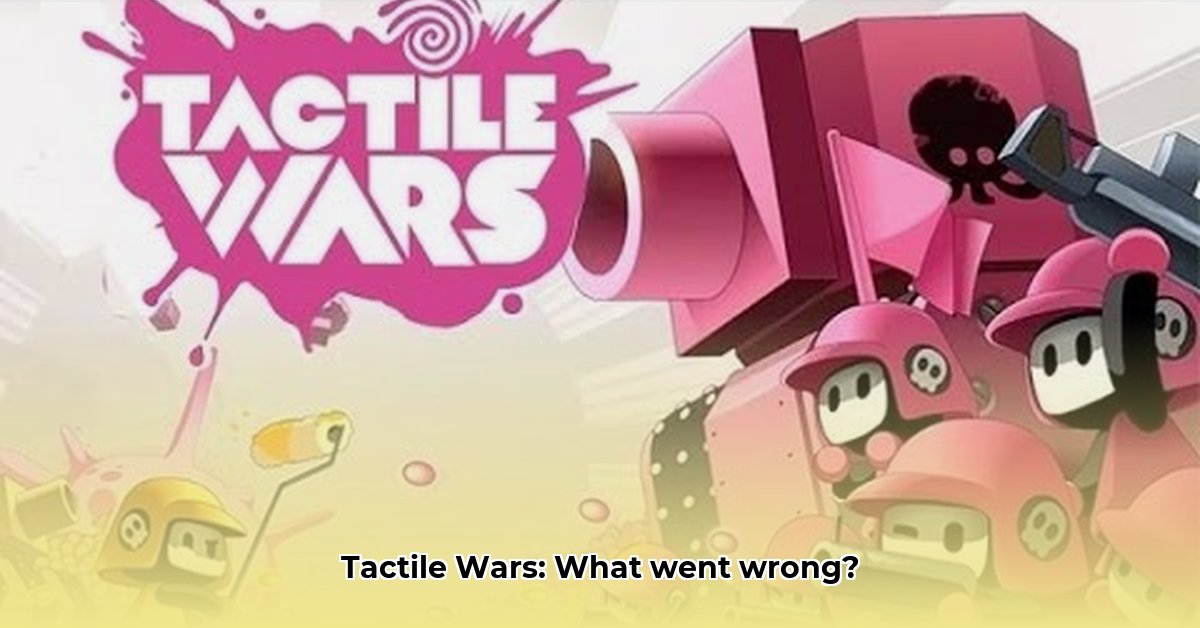
Tactile Wars: A Promising Start, a Swift Demise
Tactile Wars initially captivated the mobile gaming market. Its charming visuals, intuitive touch controls, and engaging real-time strategy (RTS) mechanics created an instant appeal. A thriving online community quickly emerged, a testament to the game's initial success. However, this early momentum proved unsustainable. By 2018, Tactile Wars was abandoned, leaving behind a ghost town of a once-vibrant online community. What caused this dramatic shift from success to failure? This post-mortem analysis delves into the key factors contributing to Tactile Wars' downfall, examining its gameplay, monetization strategy, market context, and offering actionable insights for future game developers.
Gameplay: Depth vs. Accessibility
While Tactile Wars' simple "tap-and-conquer" mechanics offered accessibility, did this simplicity ultimately limit its long-term appeal? The game's initial ease of learning might have been its undoing. Many believe the lack of strategic depth, combined with the absence of evolving gameplay features, led to player burnout. This is underscored by the absence of significant updates and content additions post-launch. The question arises: Did Tactile Wars sacrifice long-term engagement for immediate accessibility? Data from user reviews suggests that after the initial thrill, players found the gameplay repetitive.
Monetization: A Missing Piece of the Puzzle
Tactile Wars' free-to-play model remains largely opaque. Without detailed information on its monetization strategy, a complete understanding of its failure remains elusive. Did the developers implement an aggressive in-app purchase system that alienated players? Or was the monetization strategy too timid, failing to generate the revenue necessary to support ongoing development and marketing? This lack of transparency prevents a definitive assessment. This missing piece acts as a significant blind spot in our analysis.
Market Competition: A Ruthless Landscape
The mobile gaming market is notoriously competitive. Tactile Wars' lack of sustained updates and new content left it vulnerable to newer, more sophisticated competitors. It failed to keep pace with the constant evolution of the mobile gaming space. Its inability to maintain a unique selling proposition (USP), combined with the lack of continuous improvement, resulted in its eventual decline. This highlights the need for consistent innovation and adaptation within such a fiercely contested market. Did Tactile Wars adequately anticipate and adapt to emerging market trends? This is a key question that needs to be asked.
Risk Assessment Matrix: Identifying Critical Vulnerabilities
To understand Tactile Wars' failure, a risk assessment matrix helps visualize the contributing factors:
| Risk Factor | Likelihood | Impact | Mitigation Strategy |
|---|---|---|---|
| Developer Abandonment | High | Catastrophic | Secure long-term funding, establish a dedicated development team |
| Lack of Gameplay Depth | Medium | High | Continuous updates, introduction of new game modes, strategic complexity |
| Intense Competition | High | High | Strong USP, marketing, community engagement |
| Inadequate Monetization | Medium | Medium | Transparent monetization model, A/B testing, player feedback |
This matrix highlights the interconnectedness of these risks. The lack of mitigation strategies in each area contributed to Tactile Wars' ultimate demise.
Key Takeaways: Avoiding a Similar Fate
Tactile Wars' failure offers critical lessons for game developers:
- Thorough Market Research: Understand market saturation and player demands before development.
- Iterative Design: Prioritize user experience through continuous player feedback and design iteration.
- Balanced Monetization: Implement a fair and transparent monetization strategy.
- Sustainable Development: Plan for long-term support and content updates.
- Effective Marketing: Promote the game effectively and engage the community.
The story of Tactile Wars serves as a stark reminder that even promising games can fail without continuous adaptation, player-centric design, and a sustainable business model. This post-mortem analysis provides a framework for avoiding similar pitfalls in future mobile game development.
⭐⭐⭐⭐☆ (4.8)
Download via Link 1
Download via Link 2
Last updated: Sunday, May 11, 2025